
When ecology becomes a pretext: why the best intentions can lead to the worst regimes
"Hell is paved with good intentions." Few quotes summarise contemporary dystopias as well. For the most troubling societies almost never arise from chaos. They often emerge from a promise: to protect, to save, to improve.
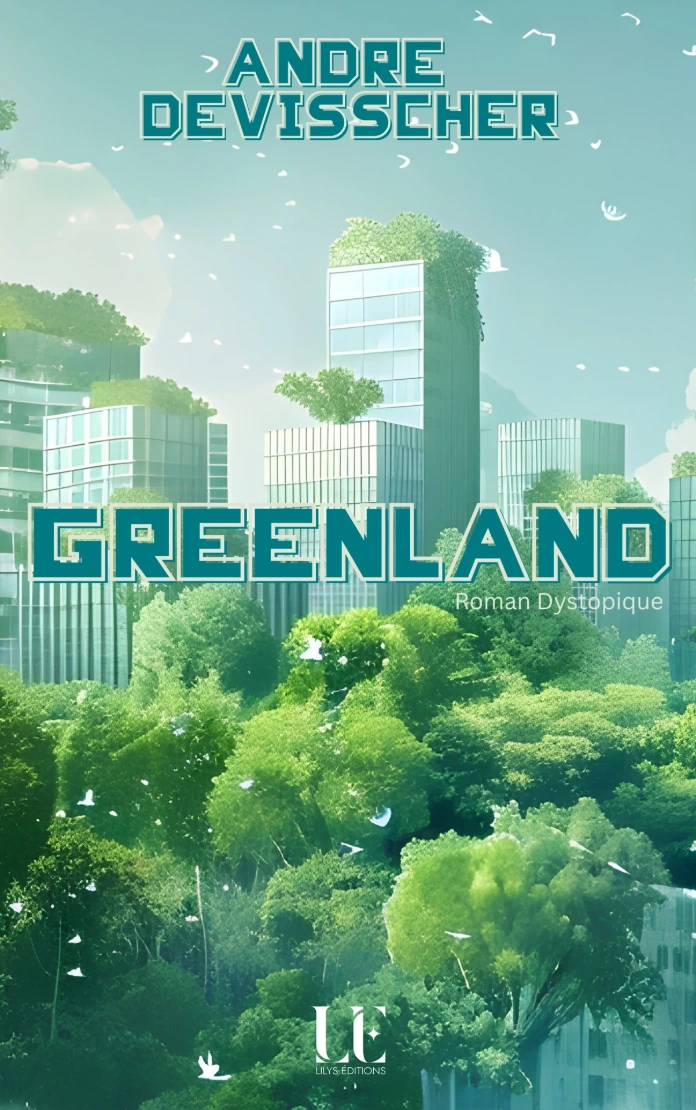
It is precisely this question that Greenland, the new novel by André Devisscher, poses.
What if we are already in the process of building this dystopia?
Paris, 2042.
The ecological transition has succeeded. Emissions have fallen. Cities have been transformed. Resources are rationed. The planet can finally breathe.
But one detail has disappeared along the way: democracy.
In this new world, every aspect of life is regulated in the name of a goal considered superior. Movement, food, work, opinions... everything is controlled. Those who dissent become enemies of the common good.
The question is no longer whether ecology is necessary.
It is.
The real question is much more disturbing:
How far are we willing to go when a cause becomes indisputable?
A dystopia that does not combat ecology
It is essential to clarify this.
Greenland is not a climate-sceptic novel.
He never questions the ecological urgency. On the contrary, he starts from a shared observation by a vast majority of scientists: our current model is not sustainable.
What the novel questions are the possible drifts when an ideology — even one based on a just cause — stops accepting debate, nuance, and contradiction.
History regularly reminds us that the worst political systems often began with an idea presented as virtuous.
Orwell, Atwood… and today?
Great dystopias do not seek to predict the future.
They amplify our present.
George Orwell imagined a society of total surveillance in 1984.
Margaret Atwood questioned the control of women's bodies in The Handmaid's Tale.
Ray Bradbury denounced the disappearance of critical thinking in Fahrenheit 451.
With Greenland, André Devisscher fits into this tradition by exploring another very contemporary concern: what becomes of a democracy when the protection of the planet becomes an absolute imperative?
A thriller above all
Yet beneath this political reflection lies a true action novel.
In a Paris almost emptied of its inhabitants, Antoon protects a community of homeless people settled on the banks of the Seine. Beside him appears Jef, an amnesiac man with astonishing abilities, whose existence could shake a regime that seemed unshakeable.
Investigation, resistance, political conspiracies, ongoing tensions: the narrative maintains the pace of a thriller while inviting the reader to reflect on very current issues.
Why does this story speak to us today
The strength of great dystopias lies in their proximity to our reality.
Digital surveillance.
Political polarisation.
Information manipulation.
Restrictions justified by urgency.
All these questions are already permeating our societies.
Greenland does not claim to provide answers. It simply invites the reader to remain vigilant.
Because a democracy does not always disappear with a bang.
Sometimes, it fades slowly, in the name of what seemed to be an excellent idea.
A read for fans of great dystopias
If you enjoy novels that blend suspense, politics, and reflection, Greenland should find its place on your bookshelf.
Between speculative thriller and political dystopia, André Devisscher imagines a credible, unsettling, and profoundly human future, where resistance often begins with a simple question:
What if the greatest danger was not our bad intentions… but our certainty of being right?